“By establishing a people‘s registration (Volkskartei – ID card) we will achieve complete supervision of the entire German people” Herman Göring, 938, quoted in The Nazi Census (2)The murderous Nazi people’s register was hugely important in the evolution of ID schemes. It played an integral part not only in the genocide but in identifying and suppressing political opponents. “By establishing a people‘s registration (Volkskartei – ID card) we will achieve complete supervision of the entire German people” Herman Göring, 938, quoted in The Nazi Census (2)The murderous Nazi people’s register was hugely important in the evolution of ID schemes. It played an integral part not only in the genocide but in identifying and suppressing political opponents. ID Cards – an Historical View |
| By Nathan Allonby Global Research, September 16, 2009 16 September 2009 |
| Url of this article: https://www.globalresearch.ca/id-cards-an-historical-view/15231 |
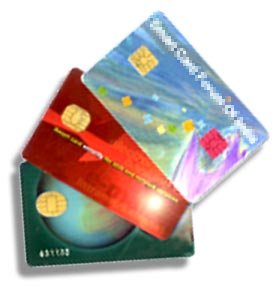 These are incredibly powerful systems and their implementation represents a profound social change, yet the public explanations for this project do not seem to add up. Surprisingly, there seems to have been little debate or exploration of the real reasons. To find the answer, we need to dig for ourselves. The companion article, ID Cards – a World View, tried to assess this from the political and technological contexts of current ID schemes. This article sets out to find what we can learn from historical precedents. Does history tell us anything about the main purpose of ID schemes? History shows strong recurring themes. Surprisingly, again and again, the main function has been controlling labour and the workforce, to serve the objective of creating a command economy. Suppression of political dissent has been in second place, although often a ‘close second’. Napoleon The Napoleonic identity card was the main ancestor of all modern ID systems. Its main purpose was to hold down wages, by stopping workers moving around to find better jobs and higher wages. Napoleon transformed the free society of the French Republic into the Empire, a tightly controlled police state. The Republic had created a degree of freedom unheard of in Europe, allowing free speech and giving workers the right to change their job or go somewhere else. By contrast, in most of Europe at this time, including Britain, the majority of the population lived in various forms of bondage, such as indenture. Unfortunately, in France, a free market and mobility of labour were driving up wages. In response, the French authorities criminalised industrial action and introduced an ID card for workers, which aimed to do two things: – i) make it impossible to change jobs without an employer’s permission and ii) restrict movement, by requiring workers to get an impossible string of visas to move legally. In 1803, Napoleon’s police chief reinstated the livret or worker’s passbook, used by the Old Regime, updated with new identity features. To get a job, workers had to give the employer their livret ID card. To take a new job, workers had to get their card back, but this required getting their employer’s permission to leave (1). This is a similar situation to human trafficking and slavery in Russia, Eastern Europe or Kuwait today, where gangs control workers by holding their passports. The card also acted as an internal passport, making it very difficult to move to seek better work or better wages. Moving from one town to another required a set of visas in the livret card. Without these, employment was illegal. Napoleon’s ID scheme failed to be completely successful for two reasons: – Firstly, there was a labour shortage, due to the war, which made employers willing to take on workers without a card; Secondly, the workers had self-help groups, such as the compagnonnages, who helped their fellows find lodgings and employment (1). They helped each other get round the system. These networks also formed the basis of organising industrial action. The authorities tried to introduce state welfare schemes and employment agencies, to supplant the compagnonnages, but these were only partially successful. After the retreat of the French Empire, countries often retained the systems of census and control Napoleon had introduced – they were too useful and efficient to abolish. Nazi Germany By the 20th Century, Germany had become one of the most democratic, tolerant and liberal nations in Europe, with welfare, social insurance and a national health service. How did the Nazis manage to transform this into totalitarianism? “By establishing a people‘s registration (Volkskartei – ID card) we will achieve complete supervision of the entire German people” Herman Göring, 938, quoted in The Nazi Census (2)The murderous Nazi people’s register was hugely important in the evolution of ID schemes. It played an integral part not only in the genocide but in identifying and suppressing political opponents. Some of the main lessons from the Nazi scheme are listed below. 1) Registration started first with employment, regulating workers. The Nazis were obsessed with the economic value of workers, with keeping down pay, eliminating strikers, weaklings and those unable to work. The ultimate aim was to identify productivity as part of Eugenics. One Nazi census organiser expressed this clearly, “The only value of a human being… is his economic value… the monetary worth of human labour productivity” (4) The Nazis created a Work Book, which in turn created files recording the entire course of each person’s life, including periods of unemployment and so-called breaches of work contracts, aiming to identify not only strikers, but also people who took too many days sick leave, changed their job to get better pay, or showed ‘disloyalty’ to their trained career, by working at something different (5). All of these traits were classified as ‘anti-social’ behaviour. There was a planned ‘final solution’ for Aryans, based on social behaviour, aimed at the sick, weak and ‘work-shy’ and also the sexually promiscuous, “clandestine prostitutes” and the ‘subproletariat‘ (6) (7). This was only abandoned in 1941-2 as the war turned against Germany. Murdering middle-class Jews produced an income for the Reich, from their assets, whereas murdering the underclass did not. 2) The file and computer system were far more important than the ID card itself. The ID card created personal files in an organised, computerised system, designed to gather and classify information, identifying groups of particular interest. The majority of Germans refused to carry ID cards – Himmler continued to complain about this as late as1945. It didn’t matter – your ID card was part of a system that identified you, silently, even when you didn’t carry it. 3) Census data was crucial to compiling the register. The organisation of the register was derived from census techniques. The computer technology used was developed for census use. Many of the key workers had come from the census. When Holland was invaded, its census records and census workers were put to use identifying the nation’s Jews, quickly and thoroughly. Many census workers showed professional commitment to identification and registration of the population, indifferent to the human consequences. Not just in Nazi Germany – in Holland, for example, the head of the national census, Jacobus Lentz, was crucial to its ‘success‘ of the identification and ‘deportation’ of Holland’s Jews, working with enthusiastic professional zeal (8). Census and statistical systems should not be regarded as something objective or neutral. The process of making statistics is not merely about gathering data, but mainly about analysing it – dividing the population into groups and segments. This means census statistics are by nature divisive, hence very political and potentially very dangerous. Welfare and health schemes, originally for the workers’ benefit, fed into the Nazi scheme, providing identifying information and productivity data. The Nazis then reversed the original purpose, singling out the weak and unsuccessful for sterilisation and euthanasia. In the final version of the Nazi register, the ID number, or ‘Reich Personnel Number‘, became an index coordinating all other databases, to be able to gather and collate information from all government functions, with the aim of “Total Observation of Life” (9). Although initially, this was about gathering more complete data, hence making the system inescapable, it also grew into a larger process: – coupling all these other functions to the political agenda. When health records could mark a person for euthanasia or sterilisation (e.g. for a case of TB), all doctors found themselves part of the political system. 5) Efficient division and classification of the population into sub-groups was essential to policies of ‘divide and rule’, to find necessary collaborators and to divide opposition. The census and registration systems made this possible, and the Nazi occupations and genocides utilised and depended upon this, as was clearly stated by Himmler himself (10). The occupations and genocide may have been brutal, but they were not crude exercises in brute force – they had to operate extremely efficiently, with very limited resources. 6) Support from the US was crucial to the development of the Nazi system. This was multi-layered. Before the Nazi’s came to power, there was support for the German eugenics and genetics research from the Rockefeller Foundation (11), which enabled the development of statistical and census techniques, and sponsored key figures such as Siegfried Koller, who became central organisers in the registration and genocide. There was extensive cooperation and technical support from IBM, providing the computing systems without which the whole project would have failed (3). Finally there was Anglo-US support for Hitler and the Nazis’ rise to power, with money and arms, featuring prominent bankers and industrialists, and figures such as Prescott Bush (12), later US Secretary of State and grandfather of President George W. Bush. (The article Profits über Alles! American Corporations and Hitler, by Dr. Jacques R. Pauwels, is a good introduction to this subject)7) Development of ‘successful’ systems did not end with the war or the fall of the Nazis. The statisticians and bureaucrats who organised the genocide continued their work. For example, Siegfried Koller, became head of the German national census and department of population statistics, retiring in 1978. Post-war, he continued to develop the methods he had started under the Nazis, applying them to medical statistics and adapting them to new electronic computers (13). China Mao’s China implemented Napoleon’s two restrictions: – preventing workers from changing jobs without permission and preventing them from moving location. China operated two systems, one for each function. Mao expanded the identity workbook into a system called the Dang-an or dossier, and compiled lifetime personal files, from school. Employees could not start a new job without their Dang-an dossier being released by their former employer, hence without permission. (This new system should not be confused with an earlier historical system, also called Dang-an, which only monitored nobles.) The dossier made the employer and workplace the focus of state data-gathering, with the employer also gathering information about the worker’s views and attitudes. The practice of keeping worker and professional files was borrowed from the former Soviet Union’s worker records. ..to meet and satisfy… labour discipline and quality control in factories and work units. The initial form of files, resembling the Soviet workbook system, included such components as work registration cards, work guarantee books, and other duty- or performance-related recording and scrutinizing devices.People came to self-censor their thoughts and actions, concerned that a careless remark could put a black mark on their dossier which could blight their promotion and possibly their whole lives. A separate residential registration system also existed – so-called household registration – which prevented Chinese workers from moving to a different area, without permission. There had been systems of self-help and mutual welfare in China – Mao was careful to supplant these, as potential sources of resistance. Welfare and support were part of a matrix of control, designed to produce dependence. Interestingly, by the 90s, the state felt no need to maintain these any longer, abolishing them in the economic reforms. The Dang-an system started to break down in the 1990’s due to forces produced by globalisation. Foreign firms entering China did not keep Dang-an records and also employed workers without Dang-an dossiers. Large-scale migration from rural areas was required, to provide a labour force for new urban industries. It was decided to encourage illegal, rather than legal, migration. The rural migrants were employed without Dang-an dossiers, either illegally or as so-called ‘part-time‘ workers, exempt from Dang-an files. The Maoists never pursued equality, preferring instead to create an unequal system, where some workers, such as those in large state industries (the Danwei), enjoyed generous benefits and privileges, from which the majority of workers were excluded. This had produced frequent major disturbances from the early 1950s onwards. Giving workers extra privileges was sometimes necessary, to maintain stability, but did not produce dependable loyalty (15). It appears a decision had been made not to increase the privileged class more than necessary, but instead to create an excluded, disenfranchised underclass, living in furtive illegality. Illegal workers have no rights and no bargaining power. Just as the economy of California depended on large numbers of illegal Mexican immigrants, so China would exploit illegal immigrants from rural areas, only on a much larger scale, designing their economy around this. A new system was needed, that could track this mobile population, moving both geographically and between different employers, and could track people living illegally, trying to avoid attention from the authorities. The US offered China a technological solution, in the form of modern smart ID and database systems, just as it had helped the Nazis, 60 years earlier. The Present Day – World ID Schemes 1) Employment is one of the spheres to be governed by ID schemes. This is happening under the guise of ‘controlling illegal migrant labour’. Workers will have to show an ID document to start work. In the USA, eligibility to work will be determined by a system called E-Verify, currently in phased implementation. In Britain, to start a job, workers already have to produce one of the ‘designated’ ID documents (e.g. passport), which will be linked to the ID registration scheme. 2) Population registers are being complied from existing databases, such as tax, health and national assistance, much as happened in Germany. An example would be the Citizen Information Register in Britain : – It will include their name, address, date of birth, sex, and a unique personal number to form a “more accurate and transparent” database than existing national insurance, tax, medical, passport, voter and driving licence records. …3) The ID number will become a central index for accessing personal information from all other databases, much like the Reich Personnel Number in Germany. 4) There is an intention to integrate and coordinate different services, such as health and education, to make them function together as part of one system, sharing data. This is clearly expressed in projects such as ‘Transformational Government’ in Britain, which place great emphasis on sharing data between different services, departments, national and local government. 5) The new ID systems will compile lifetime dossiers on every individual, automatically. 6) US population registration in Iraq, with biometric ID cards, has helped to divide the community into ethnic groups, now at war with each other, where no meaningful ethnic divisions existed before. US military anthropology programmes study community dynamics, classify and divide communities into sub-groups, assessed for usefulness, willingness to collaborate, to find allies, and to ‘divide and rule’. This is comparable to Nazi use of census and registration, to ’divide and rule’ in occupied territories. Resisting the Agenda It simply isn’t true there is nothing we can do, even though we have left it pretty late. A few hours before Adolf Eichmann was executed, a prison warden asked him, “What should the Jews have done? How could they have resisted?” Eichmann replied “…We would have been at a loss if they had disappeared before being registered… The number of our commandos was very small, and even if the police had helped us with all they had, their chances would have been at least fifty-fifty. …A mass flight would have been disastrous for us.” (17) A few thousand Jews survived in Germany through it all, to see the Nazis out. Predominantly, these were people who avoided identification by changing address and identity at the time of registration. Those who escaped identification and ‘isolation’ in ghettoes generally escaped altogether. The Census is an integral part of the identity registration system, something dangerous, to be avoided. Bureaucrats have killed people, just as surely as soldiers with guns. Another lesson from history is that identity systems require dependency to provide control. They have to be inescapable to work. Both Napoleon and Mao felt their authority undermined by workers’ self-help and welfare groups, where people helped each other out and disseminated information on how to get around the system. Effective organisations that were independent of state monitoring or control ran counter to the aims of identity controls. The Nazis didn’t have to overcome self-help groups, ironically because a previous liberal regime had supplanted them with effective state welfare. Is it a coincidence that the Nazis targeted groups with their own self-help and information networks, such as the Freemasons? In a situation today, where corporate and government power have fused in symbiosis, self-help would need to avoid dependence on either government or corporations, and perhaps even avoid dependence on money. However, the main lesson is that once modern systems of population registration are implemented, they become progressively more developed and secure, until they have an inescapable, vice-like control. It is essential to prevent them from being introduced at all. Notes 1) Martyn Lyons, Napoleon Bonaparte and the legacy of the French Revolution, London, Macmillan 1994, p. 119 2) Gotz Aly and K H Roth,, The Nazi Census – Identification and Control in the Third Reich Temple University Press, 2004, p.43 3) Edwin Black, IBM and the Holocaust, Crown Publishers, 2001, p. 125 4) Gotz Aly and K H Roth, op cit, p. 94. 5) Ibid, p. 109. 6)Ibid, pp. 109-113 7) Edwin Black, op cit. 8) Gotz Aly and K H Roth, op cit, p. 77. 9) Ibid, p. 106 10) ibid, p. 4- 5 11) ibid, p. 101 12) Webster G Tarpley and A Chaitkin, George Bush – The Unauthorised Biography, Executive Intelligence Review, 1992, pp 30 – 40 13) Gotz Aly and K H Roth, op cit 14) Victor N. Shaw, Social Control in China: A Study of Chinese Work Units, Praeger Publishers, June 30, 1996, Chapter 6, Control through Confidential Records, p. 82. 15)Elizabeth J Perry From Native Place to Workplace: Labour Origins and Outcomes of China’s Danwei System, Chapter 2, in Xiaobo Lu and Elizabeth J. Perry (editors), Danwei: The Changing Chinese Workplace in Historical and Comparative Perspective. M. E. Sharpe, 1997 16) Alan Travis, Secret go-ahead for ID card database, The Guardian, 30 Sep 2003 17) Gotz Aly and K H Roth,, op cit, p. 92. |
| Disclaimer: The contents of this article are of sole responsibility of the author(s). The Centre for Research on Globalization will not be responsible for any inaccurate or incorrect statement in this article. |

Former CBS News president Richard Salant (1961 - 64 and 1966 - 79) explained the major media's role: "Our job is to give people not what they want, but what we decide they ought to have." ...and to this very day most Americans haven't noticed they're being brained washed! ~ N. Hooben
Friday, June 1, 2018
IF YOU'RE GOING TO GET A 'REAL LICENSE' READ THIS FIRST


Sunday, April 22, 2018


Thursday, April 5, 2018
Wednesday, April 4, 2018
Feeling The Excitement of Participating in Something Historic
Here's a short story that has built in surprise for the author...I post it here for several reasons. The first reason is probably a bit more than a feeling of nostalgia; it's that feeling you get when you think you know someone although you have never met (Yes, go ahead and say it Norm..."You know Pope John Paul although you never met!). I was in Rome in 1980 but it was in Paris that I got to within twenty feet of Pope John-Paul while he visited that city. Several years later while living in San Antonio, Texas I got to see John-Paul again so to say that I know him is somewhat of a stretch.
In recent years upon visits to San Antonio I generally attend church services with a friend I've known for many years...I also worked with Thom during my military career. My friend Thom loves this story, so let's call this the second reason. And to round out the 'several reasons', I post it for you the reader, you too may be surprised! ~ Norman E. Hooben
 My morning with a saint...
The diary of a priest, being random thoughts and various things of possible interest from the founding pastor of Our Lady of the Atonement Church in San Antonio, Texas.
The canonization of Pope John Paul II brings to mind one of the most amazing events of my life -- a morning which included a personal encounter with a saint of the Holy Catholic Church. I have shared the story before, but his canonization compels me to share it again.
It was in November of 1983 that I was in Rome, taking part in the meetings which would result in the Book of Divine Worship, which serves as the foundation of the Anglican Use liturgy used by the parishes of the Ordinariates and the Pastoral Provision.
It was my first time in Rome. I had been ordained as a Catholic priest only a few months before. They were rather heady days for a young priest, walking each morning from the Casa del Clero to the Vatican offices where we were working.
On my first morning in Rome, I needed to find an altar where I could say Mass. There was a concelebrated Mass at the Casa, but I was ready for an adventure, so I headed on foot to St. Peter’s Basilica. I knew I needed to get there early, and I knew I should head immediately to the sacristy. Beyond that, I was completely ignorant about making arrangements for celebrating Mass there.
Arriving in the sacristy, and after being overwhelmed by my walk through the basilica, I was fortunate that the man at the desk was patient (and by Vatican standards, even somewhat merciful). He directed me to the vesting area, summoned an altar boy for me, and before long I was following the young server down the long corridor out into the basilica.
In my mind I can still hear the murmur of Masses being said at altar after altar, some with small congregations, others with a solitary priest. Eventually I was taken to one of the many side altars, and I began the celebration of the Mass, my first in Rome.
It was strangely comforting to hear the low hum of the other Masses proceeding, as I made my way through the liturgy. Everything seemed to be at a concentrated level as I began the Eucharistic prayer. At the consecration of the Host, when I genuflected, my eyes happened to catch the inscription on the front of the altar: S. Gregorius Magnus. It was overwhelming for me as I continued with the Mass, knowing that I was celebrating Holy Mass at the tomb of Pope St. Gregory, who had sent St. Augustine to England.
After Mass, as I made my way out of the basilica, reality returned with the work at hand. All of us serving on the special commission spent a brief time getting to know one another, and the discussions began. Although I threw myself into the work, and felt the excitement of participating in something historic, the recurring thought came to me that I would very much like to attend the upcoming Wednesday general audience with the Pope. It was a few days before that when I began to drop subtle hints, but the work was keeping us very busy. One of the kindly bishops also serving in the group knew what I was thinking, and he spoke to me during one of our breaks. He expressed his regret that our work would keep me occupied during the Wednesday audience, and then he said something which seemed rather mysterious. “On Thursday morning, if you will be in the Piazza San Pietro just to the right of the obelisk at 5:00 a.m., there will be a surprise for you,” he said.
I couldn’t imagine what he meant, but I was there by 4:00 a.m. because I could hardly sleep with the anticipation of this mystifying appointment I was keeping. It was still dark as I was saying the rosary, with the moon hanging over St. Peter’s Basilica, and when 5:00 a.m. came, I caught sight of a sliver of artificial light coming from an opening door off to my right. Being summoned to the open door by a guard, a most wonderful pilgrimage began at the bottom of a long flight of stairs.
I still was unaware of what was waiting for me – perhaps a glimpse of some great art treasure, I thought, or maybe a private visit to the basilica – whatever it was to be, it was still a mystery to me. We reached a landing on the staircase, and entered an elevator. The elevator went up a few floors and then stopped. When we exited, we were asked to turn to the right and go down another corridor. After walking several yards, I happened to glance to my left through some open doors. The mystery was solved.
There in front of me was the Holy Father’s private chapel. A familiar white-cassocked figure was kneeling before the altar, and the realization of where I was nearly took my breath away. After being escorted into the sacristy, I was told to vest for Mass. My mind was in a blur as I put on the vestments, and when I was ready I was taken to my place in the papal chapel, which was at a kneeler right next to the Holy Father himself.
There were only a few of us there – the Sisters who served in the papal household, a couple of priests, and a bishop. We spent a good deal of time in silent prayer before the Mass began, and at first I was distracted by the thought that I was kneeling immediately next to the Vicar of Christ. Soon, however, the Holy Spirit took over and I found that I was able to enter deeply into prayer. From time to time a deep sigh would come from the Holy Father, and I was reminded of St. Paul’s words to the Romans, when he wrote about “sighs too deep for words.”
After a time of prayer, it was time for the Mass to begin. The Pope’s vestments had been laid on the altar, and after he was vested we began the liturgy. I remained at my place during the Liturgy of the Word, but after the gifts were prepared at the Offertory, I joined the Holy Father at the altar. At the time of Holy Communion, he held the paten from which I received a portion of the Host, and when he had received from the chalice he passed it to me. Certainly every time we receive Holy Communion it is a special encounter with God, but I must say that it was a unique experience for me to receive the Body and Blood of Christ while standing next to the Vicar of Christ, having concelebrated with him in his own chapel.
At the conclusion of the Mass, we spent a good amount of time in thanksgiving. It was once again my privilege to kneel next to the Holy Father for this, and I had much for which to be thankful – but there would be more.
Having been escorted to a reception room, there was now the opportunity to speak briefly with the Pope. When I was presented to him, he took my hands in his, and then made what could only be described as an extraordinary statement. “I know you,” he said to me. The puzzled look on my face, and my faltering question, “How, Holy Father…?” prompted him to continue. He went on to describe how my dossier had been given to him. Because mine was the first case of a married former Episcopal priest to be considered for the position of being the canonical pastor of a parish (rather than simply a parish administrator or chaplain) it was decided that such approval should be reserved to the Pope himself, rather than simply being processed through the Congregation of the Doctrine of the Faith as others were.
With my eyes widening, Pope John Paul II described to me how my dossier was placed on his desk. He then told me how he had some uncertainty about approving a married man as an actual pastor, so he placed the dossier in his desk drawer. He then got it out again, only to put it back in the drawer. “Finally,” he said, “I once more put it on my desk, and I prayed, and the Holy Spirit told me to say ‘yes’.”
Surely that must count as the most astonishing thing I had ever heard, that the Vicar of Christ was having a conversation about me with the Holy Spirit, Who then directed him to give his approval for my ordination and appointment as pastor of Our Lady of the Atonement Church. If I hadn’t heard the story from the lips of the Pope himself, I would never have believed such a thing.
When I regained my voice, I asked the Holy Father if I could take his blessing back to my family and to the people of the parish. He threw his arms around me and drew me close while he said, “With all of my heart, I bless you and your people!” And what a blessing that has been throughout the years.
After all this, it is hardly possible to imagine there would be more, but there was yet another “once in a life-time” experience that morning. The Pope called upon one of the priests in his household to take me to “the chapel.” This confused me, because we had just come from his private chapel; however, I dutifully followed the priest, and we went off in a completely different direction down a long corridor, until we came to a large set of doors. He unlocked them and directed me in, saying to me, “Take as long as you like. I’ll wait for you out here.” He then shut the doors and left me alone without telling me where I was. It took a moment for my eyes to adjust to the dim light, and as I looked around me I immediately knew where I was standing – it was in the Sistine Chapel.
The unexpected experience of being in a place so famous was, for a moment, disorienting. To look up at the magnificent ceiling (even though it was before the restoration), and to be able to explore the chapel all by myself, thinking about the papal elections which had taken place there - including the election of the Pope with whom I had just concelebrated the Holy Mass - was overwhelming. I spent quite a bit of time taking it all in, offering thanks to God for such a blessed experience, and then I remembered the priest outside the door, patiently waiting for me.
He helped me find my way back to the stairs which I had climbed earlier that morning, and when I went through the doors leading into Piazza San Pietro, it was filled with the usual bustle of a day in Rome. It was all I could do to stop myself from rushing up to the first person I saw and asking him to guess where I’d just been! Instead, I headed across the Piazza to the office where we were working on the Book of Divine Worship, and I continued on the project which was the reason for my being there.
It had been quite a morning. Now all I can say is, "St. John Paul II, pray for us."

In recent years upon visits to San Antonio I generally attend church services with a friend I've known for many years...I also worked with Thom during my military career. My friend Thom loves this story, so let's call this the second reason. And to round out the 'several reasons', I post it for you the reader, you too may be surprised! ~ Norman E. Hooben

The diary of a priest, being random thoughts and various things of possible interest from the founding pastor of Our Lady of the Atonement Church in San Antonio, Texas.
The canonization of Pope John Paul II brings to mind one of the most amazing events of my life -- a morning which included a personal encounter with a saint of the Holy Catholic Church. I have shared the story before, but his canonization compels me to share it again.
It was in November of 1983 that I was in Rome, taking part in the meetings which would result in the Book of Divine Worship, which serves as the foundation of the Anglican Use liturgy used by the parishes of the Ordinariates and the Pastoral Provision.
It was my first time in Rome. I had been ordained as a Catholic priest only a few months before. They were rather heady days for a young priest, walking each morning from the Casa del Clero to the Vatican offices where we were working.
On my first morning in Rome, I needed to find an altar where I could say Mass. There was a concelebrated Mass at the Casa, but I was ready for an adventure, so I headed on foot to St. Peter’s Basilica. I knew I needed to get there early, and I knew I should head immediately to the sacristy. Beyond that, I was completely ignorant about making arrangements for celebrating Mass there.
Arriving in the sacristy, and after being overwhelmed by my walk through the basilica, I was fortunate that the man at the desk was patient (and by Vatican standards, even somewhat merciful). He directed me to the vesting area, summoned an altar boy for me, and before long I was following the young server down the long corridor out into the basilica.
In my mind I can still hear the murmur of Masses being said at altar after altar, some with small congregations, others with a solitary priest. Eventually I was taken to one of the many side altars, and I began the celebration of the Mass, my first in Rome.
It was strangely comforting to hear the low hum of the other Masses proceeding, as I made my way through the liturgy. Everything seemed to be at a concentrated level as I began the Eucharistic prayer. At the consecration of the Host, when I genuflected, my eyes happened to catch the inscription on the front of the altar: S. Gregorius Magnus. It was overwhelming for me as I continued with the Mass, knowing that I was celebrating Holy Mass at the tomb of Pope St. Gregory, who had sent St. Augustine to England.
After Mass, as I made my way out of the basilica, reality returned with the work at hand. All of us serving on the special commission spent a brief time getting to know one another, and the discussions began. Although I threw myself into the work, and felt the excitement of participating in something historic, the recurring thought came to me that I would very much like to attend the upcoming Wednesday general audience with the Pope. It was a few days before that when I began to drop subtle hints, but the work was keeping us very busy. One of the kindly bishops also serving in the group knew what I was thinking, and he spoke to me during one of our breaks. He expressed his regret that our work would keep me occupied during the Wednesday audience, and then he said something which seemed rather mysterious. “On Thursday morning, if you will be in the Piazza San Pietro just to the right of the obelisk at 5:00 a.m., there will be a surprise for you,” he said.
I couldn’t imagine what he meant, but I was there by 4:00 a.m. because I could hardly sleep with the anticipation of this mystifying appointment I was keeping. It was still dark as I was saying the rosary, with the moon hanging over St. Peter’s Basilica, and when 5:00 a.m. came, I caught sight of a sliver of artificial light coming from an opening door off to my right. Being summoned to the open door by a guard, a most wonderful pilgrimage began at the bottom of a long flight of stairs.
I still was unaware of what was waiting for me – perhaps a glimpse of some great art treasure, I thought, or maybe a private visit to the basilica – whatever it was to be, it was still a mystery to me. We reached a landing on the staircase, and entered an elevator. The elevator went up a few floors and then stopped. When we exited, we were asked to turn to the right and go down another corridor. After walking several yards, I happened to glance to my left through some open doors. The mystery was solved.
There in front of me was the Holy Father’s private chapel. A familiar white-cassocked figure was kneeling before the altar, and the realization of where I was nearly took my breath away. After being escorted into the sacristy, I was told to vest for Mass. My mind was in a blur as I put on the vestments, and when I was ready I was taken to my place in the papal chapel, which was at a kneeler right next to the Holy Father himself.
There were only a few of us there – the Sisters who served in the papal household, a couple of priests, and a bishop. We spent a good deal of time in silent prayer before the Mass began, and at first I was distracted by the thought that I was kneeling immediately next to the Vicar of Christ. Soon, however, the Holy Spirit took over and I found that I was able to enter deeply into prayer. From time to time a deep sigh would come from the Holy Father, and I was reminded of St. Paul’s words to the Romans, when he wrote about “sighs too deep for words.”
After a time of prayer, it was time for the Mass to begin. The Pope’s vestments had been laid on the altar, and after he was vested we began the liturgy. I remained at my place during the Liturgy of the Word, but after the gifts were prepared at the Offertory, I joined the Holy Father at the altar. At the time of Holy Communion, he held the paten from which I received a portion of the Host, and when he had received from the chalice he passed it to me. Certainly every time we receive Holy Communion it is a special encounter with God, but I must say that it was a unique experience for me to receive the Body and Blood of Christ while standing next to the Vicar of Christ, having concelebrated with him in his own chapel.
At the conclusion of the Mass, we spent a good amount of time in thanksgiving. It was once again my privilege to kneel next to the Holy Father for this, and I had much for which to be thankful – but there would be more.
Having been escorted to a reception room, there was now the opportunity to speak briefly with the Pope. When I was presented to him, he took my hands in his, and then made what could only be described as an extraordinary statement. “I know you,” he said to me. The puzzled look on my face, and my faltering question, “How, Holy Father…?” prompted him to continue. He went on to describe how my dossier had been given to him. Because mine was the first case of a married former Episcopal priest to be considered for the position of being the canonical pastor of a parish (rather than simply a parish administrator or chaplain) it was decided that such approval should be reserved to the Pope himself, rather than simply being processed through the Congregation of the Doctrine of the Faith as others were.
With my eyes widening, Pope John Paul II described to me how my dossier was placed on his desk. He then told me how he had some uncertainty about approving a married man as an actual pastor, so he placed the dossier in his desk drawer. He then got it out again, only to put it back in the drawer. “Finally,” he said, “I once more put it on my desk, and I prayed, and the Holy Spirit told me to say ‘yes’.”
Surely that must count as the most astonishing thing I had ever heard, that the Vicar of Christ was having a conversation about me with the Holy Spirit, Who then directed him to give his approval for my ordination and appointment as pastor of Our Lady of the Atonement Church. If I hadn’t heard the story from the lips of the Pope himself, I would never have believed such a thing.
When I regained my voice, I asked the Holy Father if I could take his blessing back to my family and to the people of the parish. He threw his arms around me and drew me close while he said, “With all of my heart, I bless you and your people!” And what a blessing that has been throughout the years.
After all this, it is hardly possible to imagine there would be more, but there was yet another “once in a life-time” experience that morning. The Pope called upon one of the priests in his household to take me to “the chapel.” This confused me, because we had just come from his private chapel; however, I dutifully followed the priest, and we went off in a completely different direction down a long corridor, until we came to a large set of doors. He unlocked them and directed me in, saying to me, “Take as long as you like. I’ll wait for you out here.” He then shut the doors and left me alone without telling me where I was. It took a moment for my eyes to adjust to the dim light, and as I looked around me I immediately knew where I was standing – it was in the Sistine Chapel.
The unexpected experience of being in a place so famous was, for a moment, disorienting. To look up at the magnificent ceiling (even though it was before the restoration), and to be able to explore the chapel all by myself, thinking about the papal elections which had taken place there - including the election of the Pope with whom I had just concelebrated the Holy Mass - was overwhelming. I spent quite a bit of time taking it all in, offering thanks to God for such a blessed experience, and then I remembered the priest outside the door, patiently waiting for me.
He helped me find my way back to the stairs which I had climbed earlier that morning, and when I went through the doors leading into Piazza San Pietro, it was filled with the usual bustle of a day in Rome. It was all I could do to stop myself from rushing up to the first person I saw and asking him to guess where I’d just been! Instead, I headed across the Piazza to the office where we were working on the Book of Divine Worship, and I continued on the project which was the reason for my being there.
It had been quite a morning. Now all I can say is, "St. John Paul II, pray for us."
____________________________________

Tuesday, March 27, 2018
Subscribe to:
Posts (Atom)